UX, embodiment and accuracy in table tennis
Exploration of accuracy, bodily meaning, and playful interaction through a projected table tennis game.

Exploration of accuracy, bodily meaning, and playful interaction through a projected table tennis game.
Bodily concept exploration, storyboard, physical/digital prototyping. Prototype built using Playstation Eye and OpenCV in Visual Studio.
This project began as a way to explore bodily interaction, spatiality, and accuracy in a physical-digital game inspired by the PingPongPlus (MIT) project, but with a different technical solution. I wanted to investigate how the player can use the whole body - not just arms and eyes - to find timing, direction, and meaning in the task.
The aim was to:
The project was carried out over a short period and served as an experiment in combining physical accuracy with digital feedback.
Here is a video of the interactive table tennis table in use.
The concept was a simple projected table tennis game where the player was given projected speed lines to alter the experience and had to hit the ball towards visual target areas on the table. These targets changed location depending on hits, creating a hybrid of digital response and physical action. The idea was to create:
The most important method at the start of the project became the storyboard. It was not used for UI flows, but to sense the 'bodily meaning' of the concept. Through storyboards I explored:
In practice, the storyboard became a way to 'feel into' the user benefit and the sense of play before the technology was in place. It also provided clear guidance on how the prototype needed to be built to achieve the right physical conditions.
The prototype consisted of a standard table tennis table with projected targets. The system provided visual feedback when the ball hit the surface, allowing the game to work in its basic idea. During testing, an unexpected effect emerged:
This happened because the table was too small for the game to work at full speed. Precision became too difficult, causing the body to find new, imaginative ways to create meaning. This was an important insight: if an embodied system is too difficult, the player creates their own rules through the body.
Storyboards were created to better understand the project's meaning.

Speed lines were projected under the ball to explore if and how they affected the game's meaning

In more advanced gameplay moments, such as when Pong was projected onto the table and controlled via the ball's speed lines, it could become too difficult. Then players began inventing their own games.

It showed why the game was interesting, how it could feel, and what kind of physical meaning it created.
When the system is difficult, improvised behaviours emerge - which is useful to observe in embodied UX. Bodily UX involves designing for systems that occupy space, as well as designing based on players' bodies and prior knowledge.
The size of the table controlled the entire experience and showed how constraints quickly change the sense of play.
It's about shaping space, rhythm, hitting surfaces, and meaning - not just logic and rules.
This project became a quick but valuable experiment in how body, space, and digital feedback can interact in a small game. The storyboard made it possible to sense the user benefits and bodily experience before a more functional prototype was created. The prototype showed how people create meaning through play. Together, they provided a clear insight into how embodied UX can take shape, even in small and early projects.
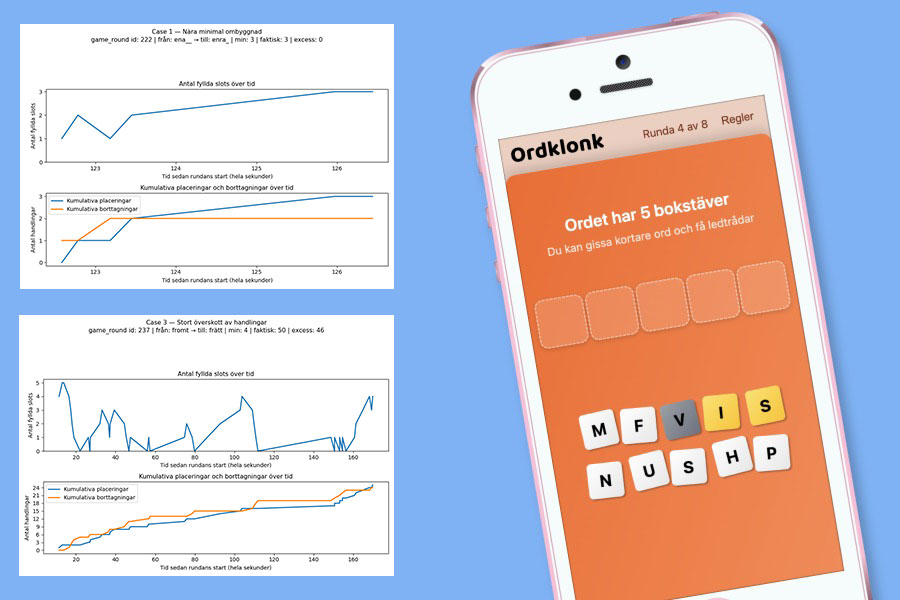
Experimental UX study investigating how moving tiles in an interface can support thinking and problem-solving.
More about Embodied UX in a word game: moving letter tiles as a cognitive strategy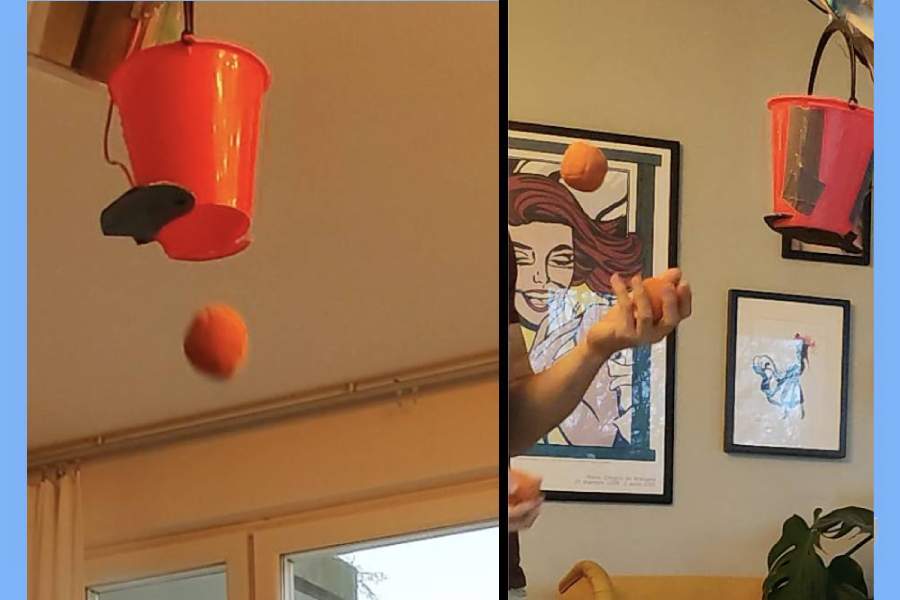
Embodied UX prototype where voice, rhythm, and physical interaction are explored through rapid prototyping in real-world movement.
More about UX, embodiment and rhythm in juggling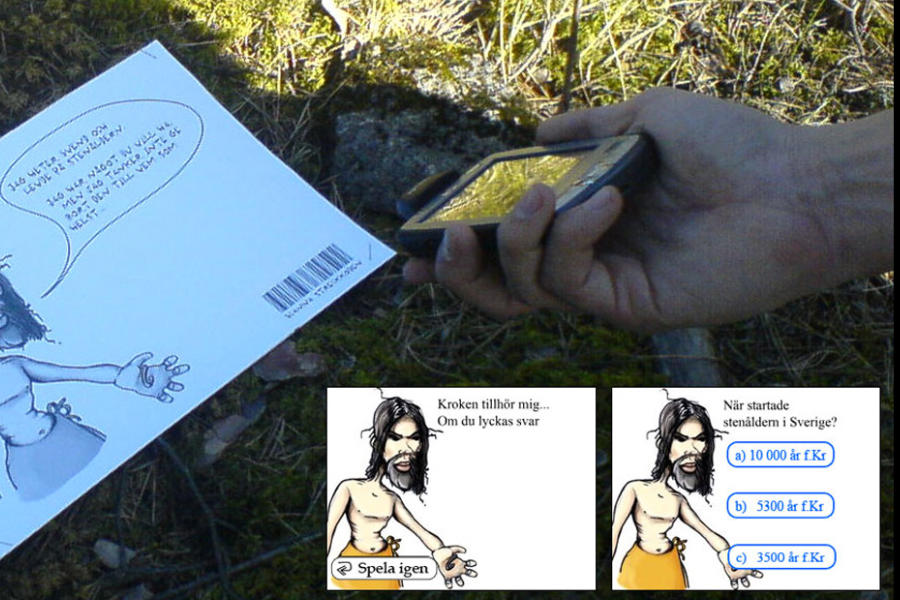
Embodied UX project where physical activity, place, and digital interaction are combined in an outdoor game.
More about Stone Age Trail - UX, embodiment and nature experiences
Study of how design artefacts influence idea generation in game design through embodied and participatory methods.
More about Making players design – UX och embodied speldesign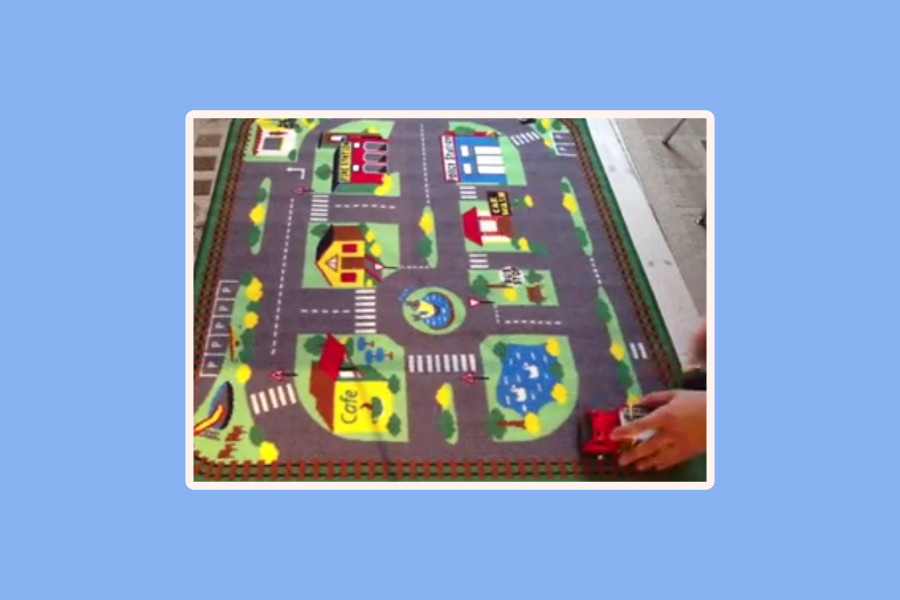
Embodied UX prototype using RFID, where physical play is augmented with real-time audio and missions.
More about UX, embodiment och fantasi i interaktiv bilmatta
