New company website for SL
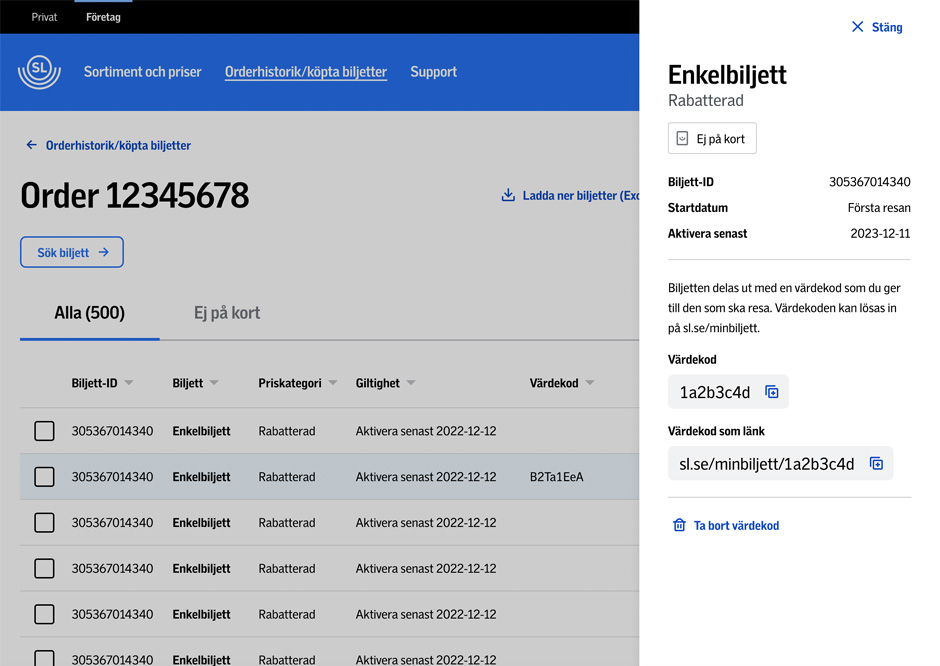
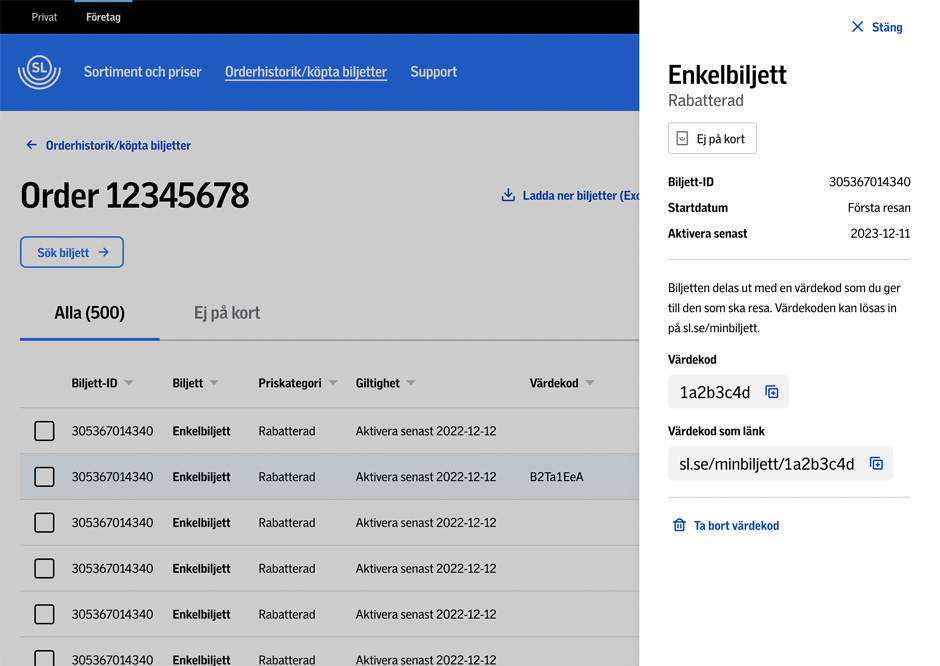
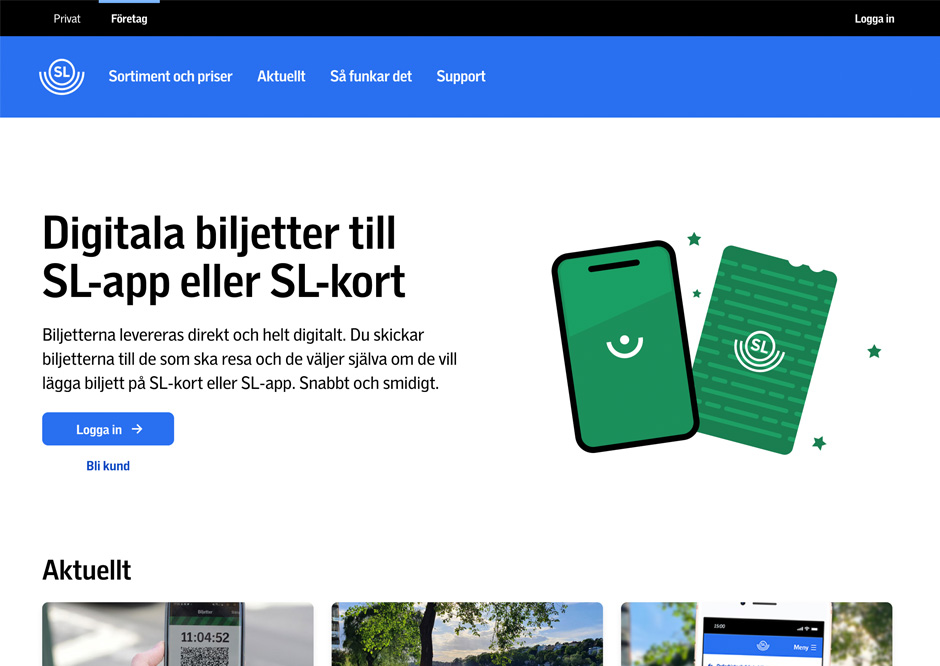
For SL, as a consultant from TietoEvry, I designed a new version of SL's company website. On the site, companies and schools can buy and manage tickets.
For SL, as a consultant from TietoEvry, I designed a new version of SL's company website. On the site, companies and schools can buy and manage tickets.
Mapped needs from users and customers through interviews, workshops, and user testing. I developed concepts and prototypes, collaborated with developers, explored the target group, and created customer journeys, thematic analyses, and quantitative analyses. At SL, I worked agilely, drove the team's design work, and collaborated closely with developers.
The company website is aimed at businesses and schools with employees or students who need to travel with SL. In this work, the "old" company website was replaced by a new one. A key point of interest was the varied target groups: large and small businesses and schools, as well as the employees or students who receive the tickets.
The person travelling receives a value code, which can be redeemed for a ticket to add to the SL app or the green SL card. Several user tests with travellers were conducted in which they used both lo-fi and realistic working prototypes. Analysis of the tests was both qualitative (thematic) and quantitative. Once the services were launched, we followed up usage through data analysis.
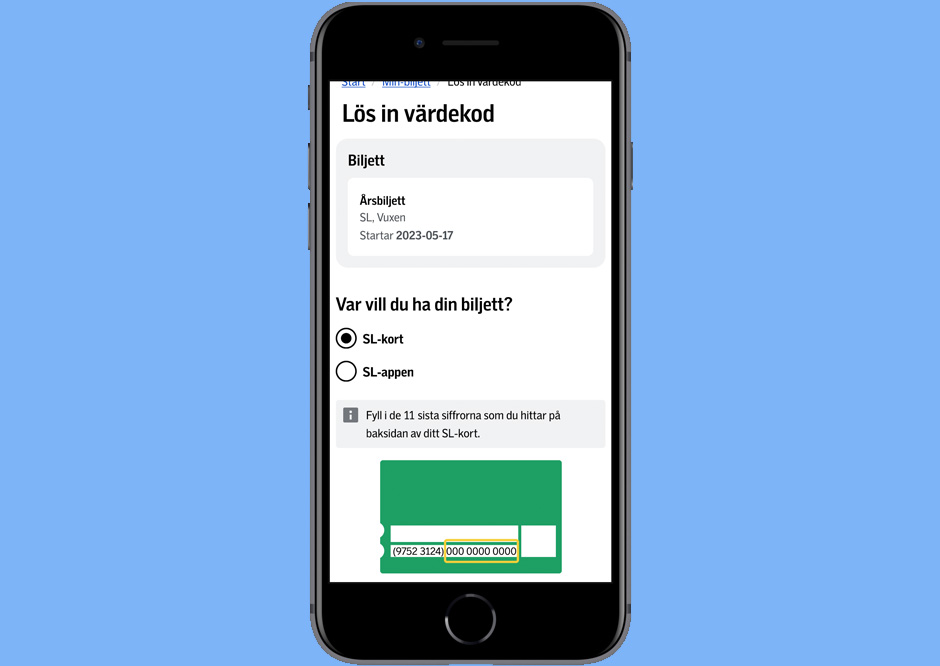
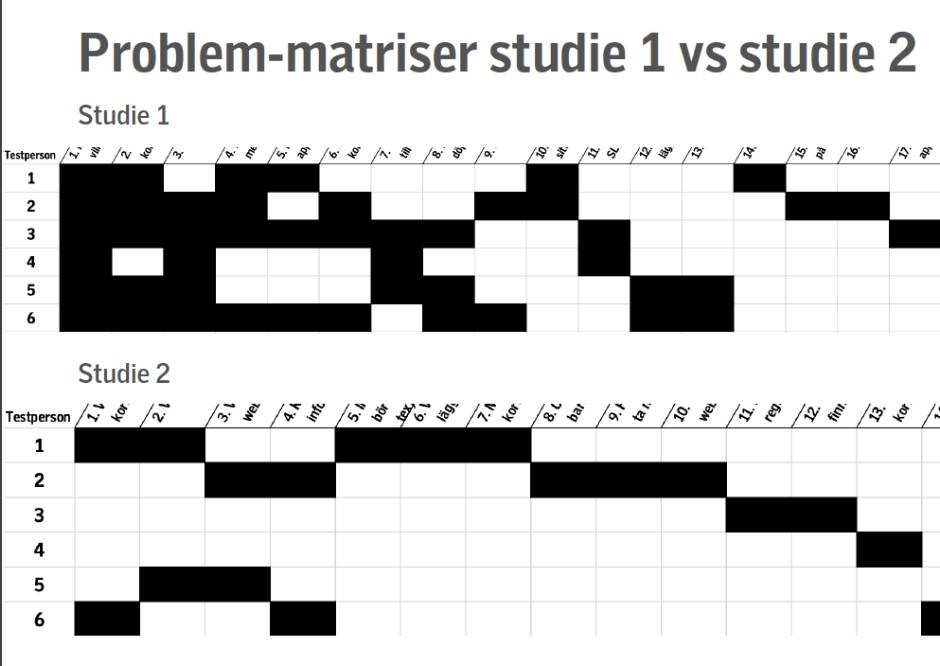
If a traveller lost their card or got a new phone, they previously had to call customer service for help. Each customer service call costs SL money, and with often more than 600,000 travellers per day, that leads to many lost tickets and many calls. A digital service for this has saved SL a great deal. To be as certain as possible that the service would be useful, we carefully tested different prototype variants. We compiled identified problems into problem matrices and were able to calculate measures such as the probability of users encountering problems in the service, estimates of the total number of problems in the service, ROI from the design work, and estimates of how many users should be included in the next round of testing. This has been valuable in ensuring that newer iterations of the service do not worsen important values. The quantitative analysis was also highly effective in internal communication with SL.
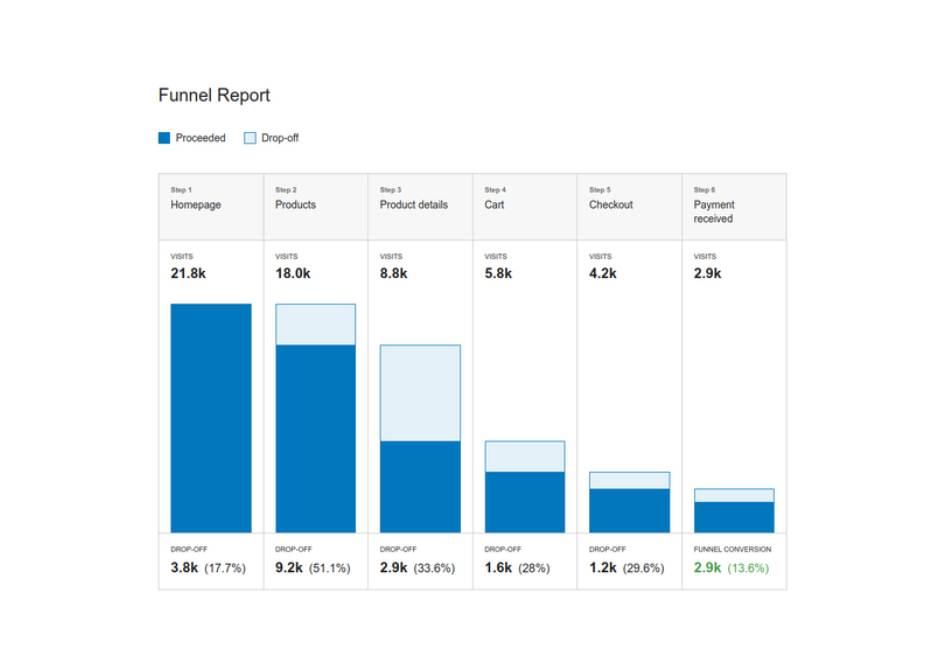
To ensure that the released services create value for SL, we tracked several metrics in the analytics tool Matomo. Several funnels were set up to monitor how service iterations were used. We were able to identify problem areas and improve them, and also understand -- as well as show SL -- that the services work well and create value for both the traveller and SL.
In the design work around purchasing, distributing, and administering tickets, I led a customer insight effort in which we interviewed several companies and schools of different sizes. The needs were formulated as customer journeys and served as a foundation for sketches and prototypes that were then user tested. I also contributed to the agile work with the development team.
I collaborated with SL's communications department and also contributed illustrations. An interesting part of the work was designing for the editors who needed to be able to set up, for example, the homepage in the Contentful CMS.
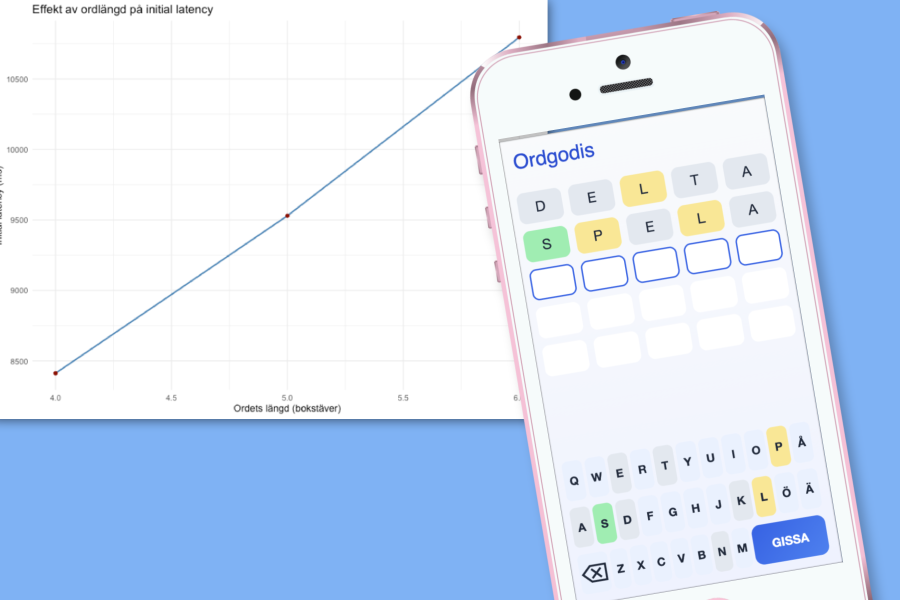
Experimented with AI-generated themes in a word game and tested how design and cognitive load affect users' decision tempo.
More about Measurable UX in a word game: Vue, AI-generated themes, and decision tempo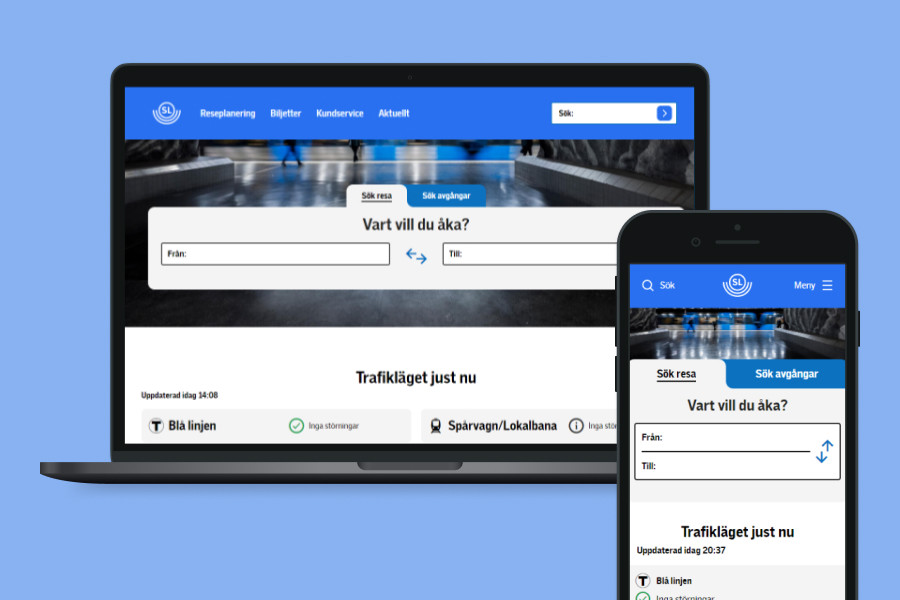
Design lead for sl.se, focused on hypothesis-driven product development, system design, and data-driven decision-making.
More about New website for SL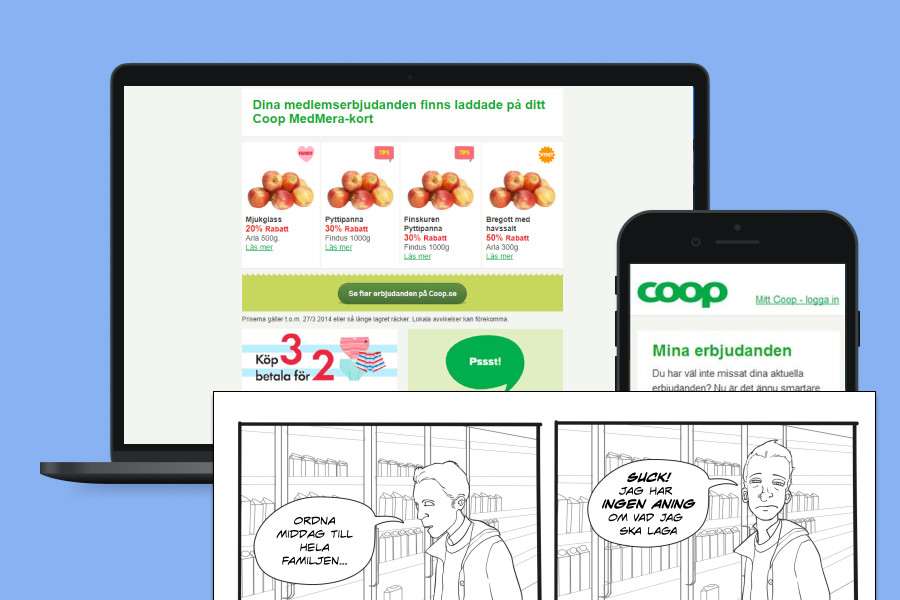
Concept development and frontend implementation, with campaigns and newsletters designed and built at scale.
More about UX at Coop
UX in complex systems, where prototypes were used as tools to align business, technology, and requirements.
More about Digitalization of social systems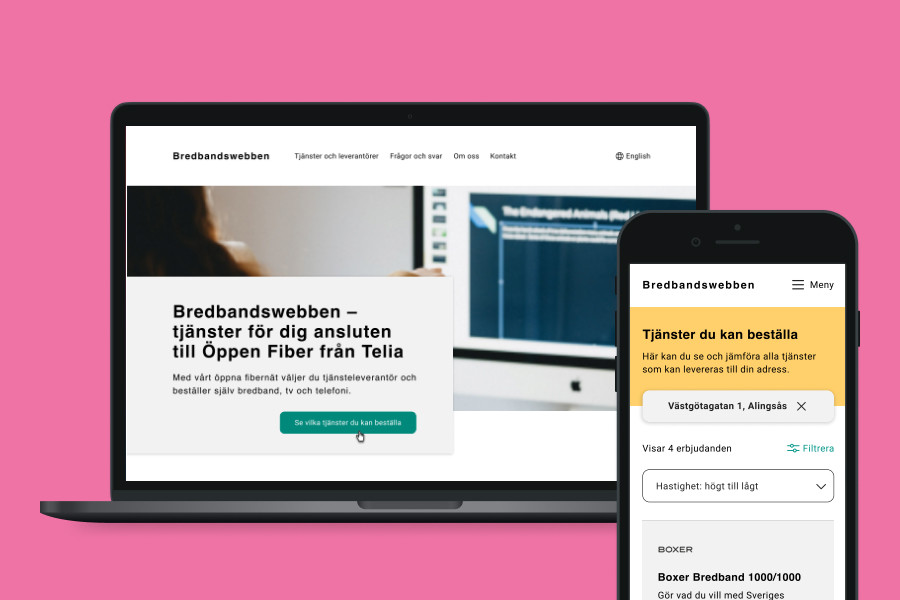
UX and design systems for Telia, where structure, visual design, and component thinking were aligned within product development.
More about Bredbandswebben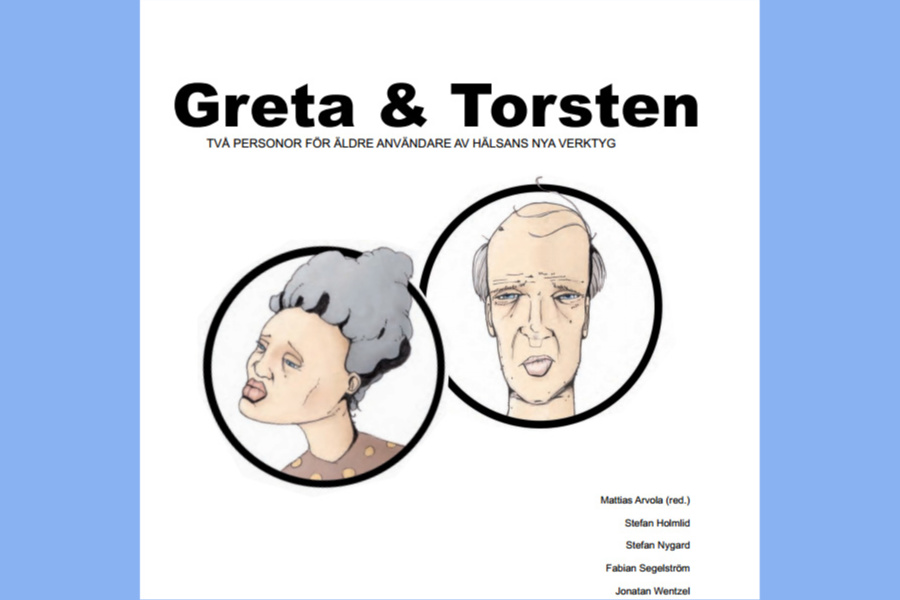
User research and personas, where interviews and storyboards were used to understand the needs of older adults.
More about Greta and Torsten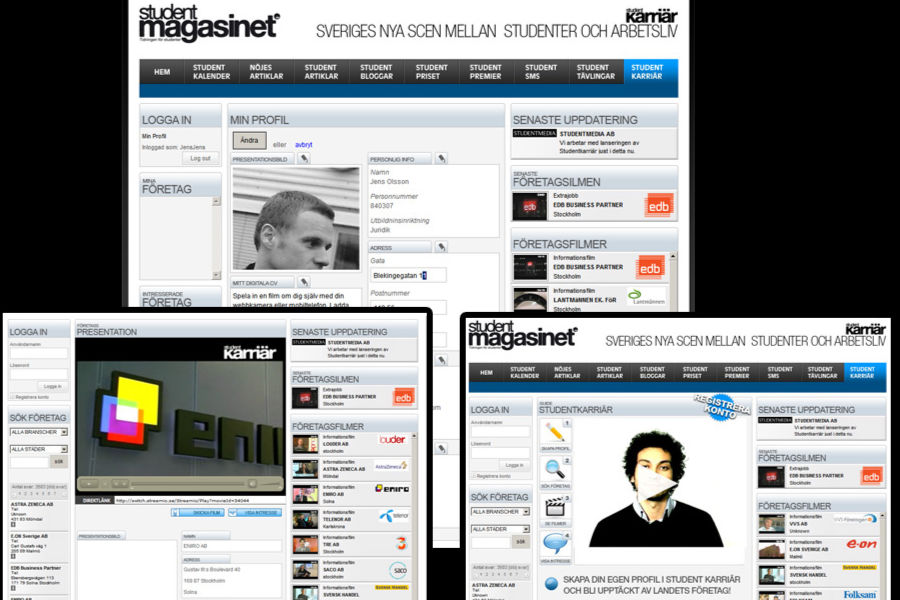
Interaction design and development of a platform that matches students with companies.
More about Student career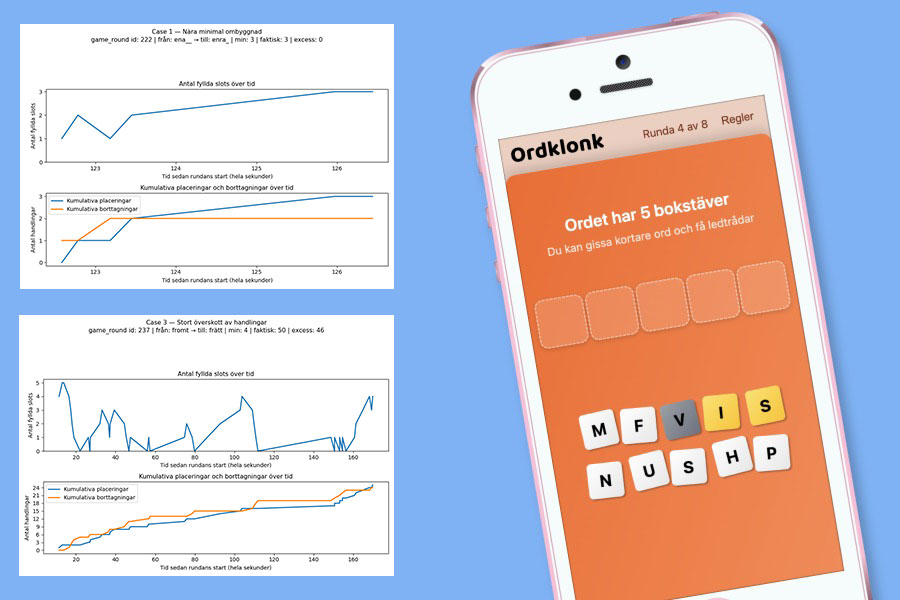
Experimental UX study investigating how moving tiles in an interface can support thinking and problem-solving.
More about Embodied UX in a word game: moving letter tiles as a cognitive strategy
